

Olive oil — and especially extra virgin olive oil (EVOO) — is one of the most researched foods in modern nutrition science and the heart of the Mediterranean diet. For thousands of years it has been pressed from olives across Anatolia and the Mediterranean basin; today, peer-reviewed studies from Harvard, the American Heart Association, and landmark clinical trials help explain why this golden oil has earned its reputation. Below is an evidence-based guide to the real benefits of olive oil, what the science does (and does not) prove, and how to choose and use it.
Key takeaways
- Healthy fats + antioxidants: Olive oil is the richest common cooking oil in monounsaturated fat (oleic acid) and is packed with protective polyphenols such as oleocanthal, oleuropein, and hydroxytyrosol.
- Heart health: The PREDIMED clinical trial linked a Mediterranean diet with extra virgin olive oil to roughly a 30% lower risk of major cardiovascular events.
- Anti-inflammatory: Its oleocanthal inhibits the same COX enzymes as ibuprofen.
- Brain, metabolic & longevity links: Higher intake is associated with lower risks of dementia-related death, type 2 diabetes, and premature death.
- Best grade: Cold-pressed extra virgin olive oil keeps the most polyphenols.
- Daily amount: About 1.5–3 tablespoons (20–40 g) per day, ideally replacing butter and other saturated fats.
What makes olive oil so healthy?
Two things set olive oil apart. First, its fat is mostly oleic acid, a monounsaturated fat that, when it replaces saturated fat, helps lower LDL ("bad") cholesterol while supporting HDL ("good") cholesterol. Second, real extra virgin olive oil is essentially a fresh fruit juice: cold-pressed without heat or chemicals, it retains hundreds of bioactive polyphenols. The European Food Safety Authority (EFSA) permits an official claim that "olive oil polyphenols contribute to the protection of blood lipids from oxidative stress" for oils delivering at least 5 mg of hydroxytyrosol and its derivatives per 20 g.
1. Supports heart health
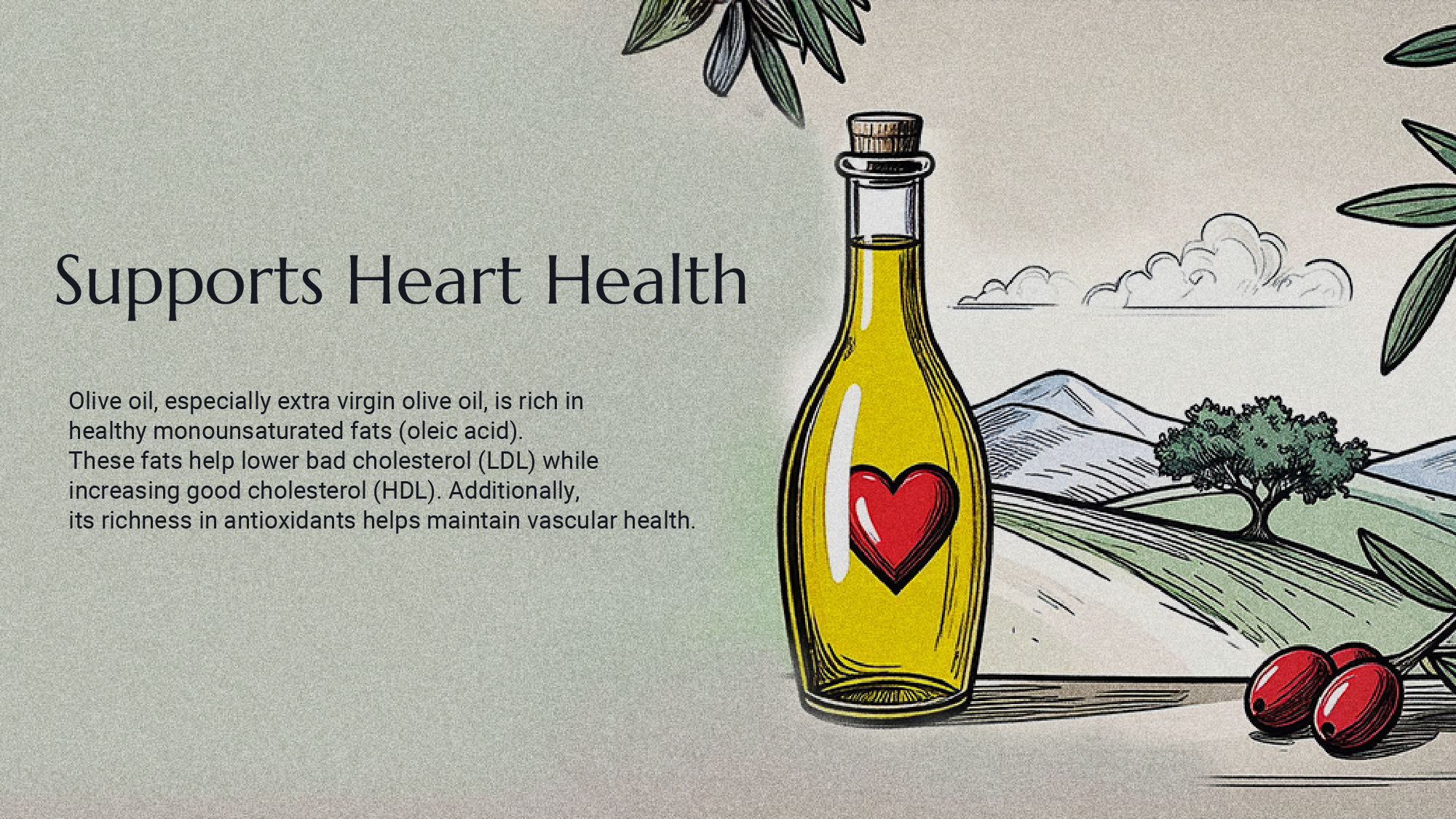
Olive oil, especially extra virgin olive oil, is rich in healthy monounsaturated fats (oleic acid). These fats help lower bad cholesterol (LDL) while increasing good cholesterol (HDL). Its richness in antioxidants also helps maintain vascular health.
The evidence here is unusually strong. The PREDIMED randomized trial followed 7,447 high-risk adults and found that a Mediterranean diet supplemented with ~50 g of EVOO per day was associated with about a 30% lower risk of heart attack, stroke, and cardiovascular death versus a low-fat control (hazard ratio 0.70). In a separate analysis of nearly 93,000 U.S. adults, those eating more than half a tablespoon of olive oil daily had 14% lower total cardiovascular disease and 18% lower coronary heart disease risk. In 2018 the U.S. FDA authorized a qualified health claim that consuming about 1.5 tablespoons (20 g) of high–oleic-acid oils daily, in place of saturated fat, "may reduce the risk of coronary heart disease."
2. Has anti-inflammatory properties
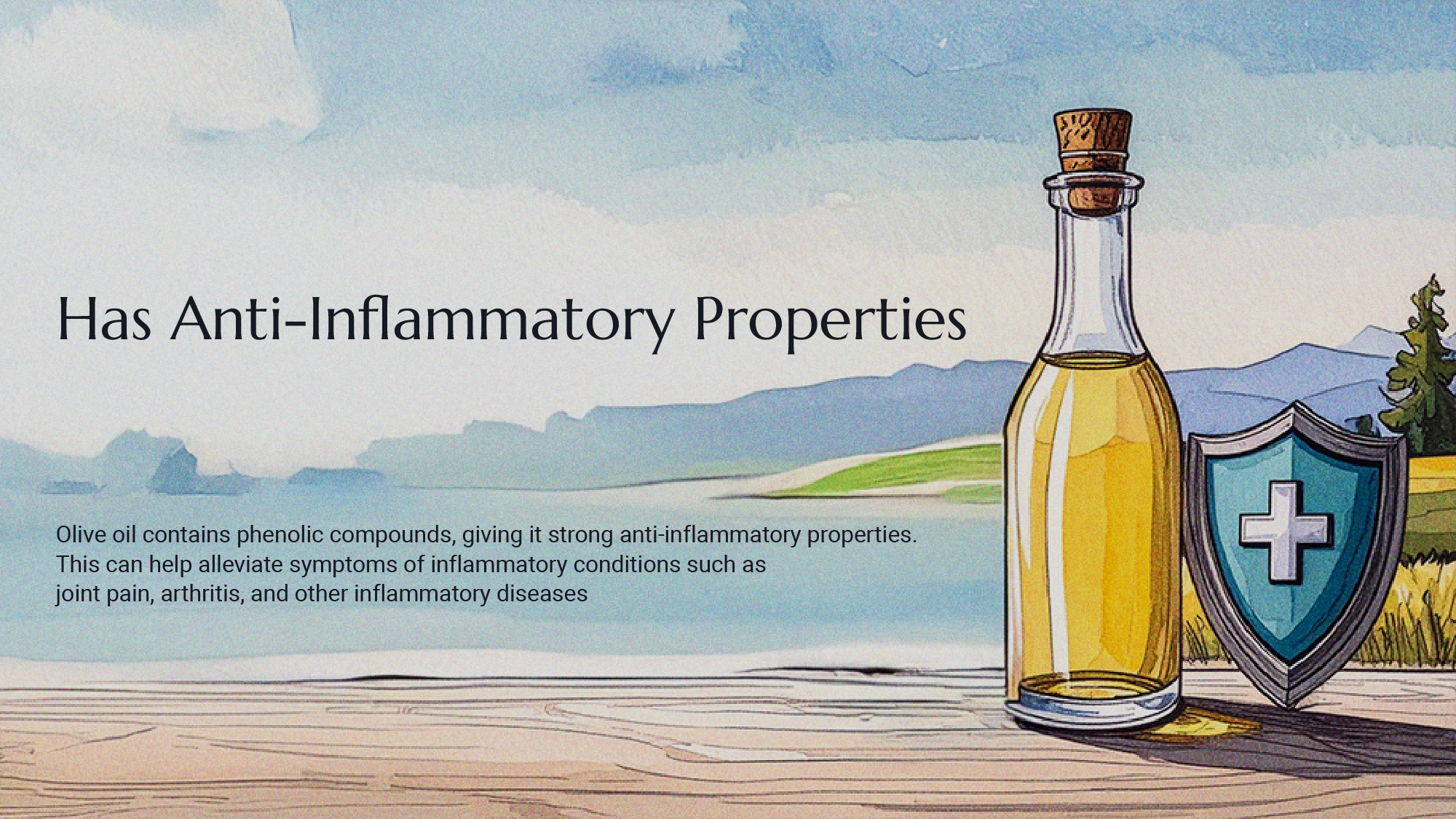
Olive oil contains phenolic compounds that give it strong anti-inflammatory properties. This can help ease the burden of inflammatory conditions such as joint pain and arthritis.
The standout compound is oleocanthal. In a landmark 2005 study published in Nature, researchers showed that oleocanthal inhibits the same COX-1 and COX-2 enzymes targeted by ibuprofen — which is why a good EVOO produces that peppery sting at the back of the throat. Diets rich in olive oil have been shown to lower inflammatory markers such as CRP and IL-6, and the Arthritis Foundation recommends olive oil as part of an anti-inflammatory eating pattern. Importantly, this is a dietary effect that builds over time — it is not the same as taking a drug dose of a painkiller.
3. Improves brain function
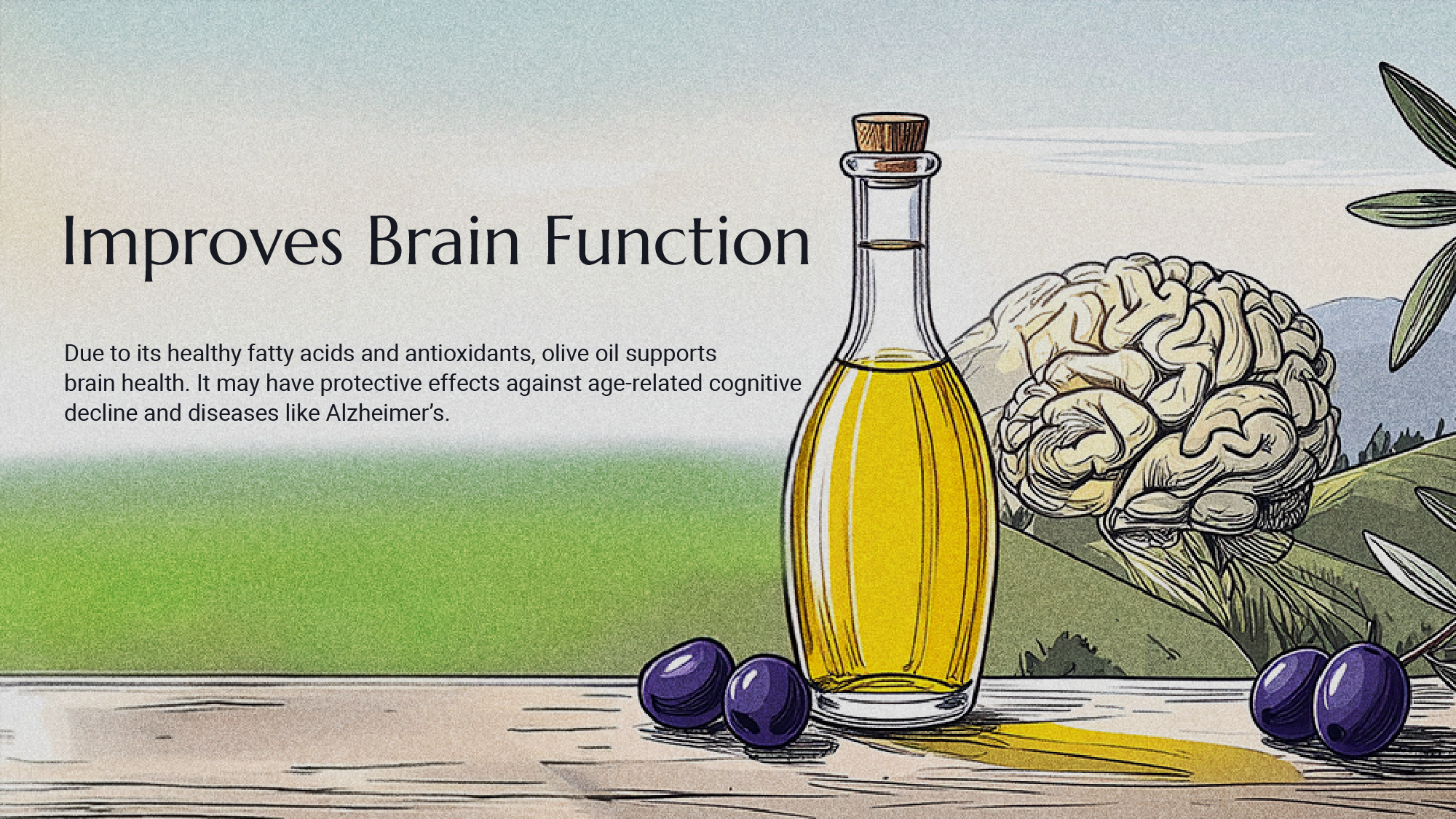
Thanks to its healthy fatty acids and antioxidants, olive oil supports brain health and may have protective effects against age-related cognitive decline and diseases like Alzheimer's.
A 2024 Harvard study published in JAMA Network Open found that adults who consumed at least 7 g of olive oil per day had a 28% lower risk of dementia-related death over 28 years, regardless of genetics or overall diet quality. Olive-oil-forward eating patterns like the MIND diet are associated with slower cognitive decline, and laboratory studies suggest oleocanthal may help clear amyloid-beta from the brain. These cognitive findings are largely observational or based on cell and animal models, so they show association rather than proof — but they point consistently in a favorable direction.
4. Benefits skin and hair health
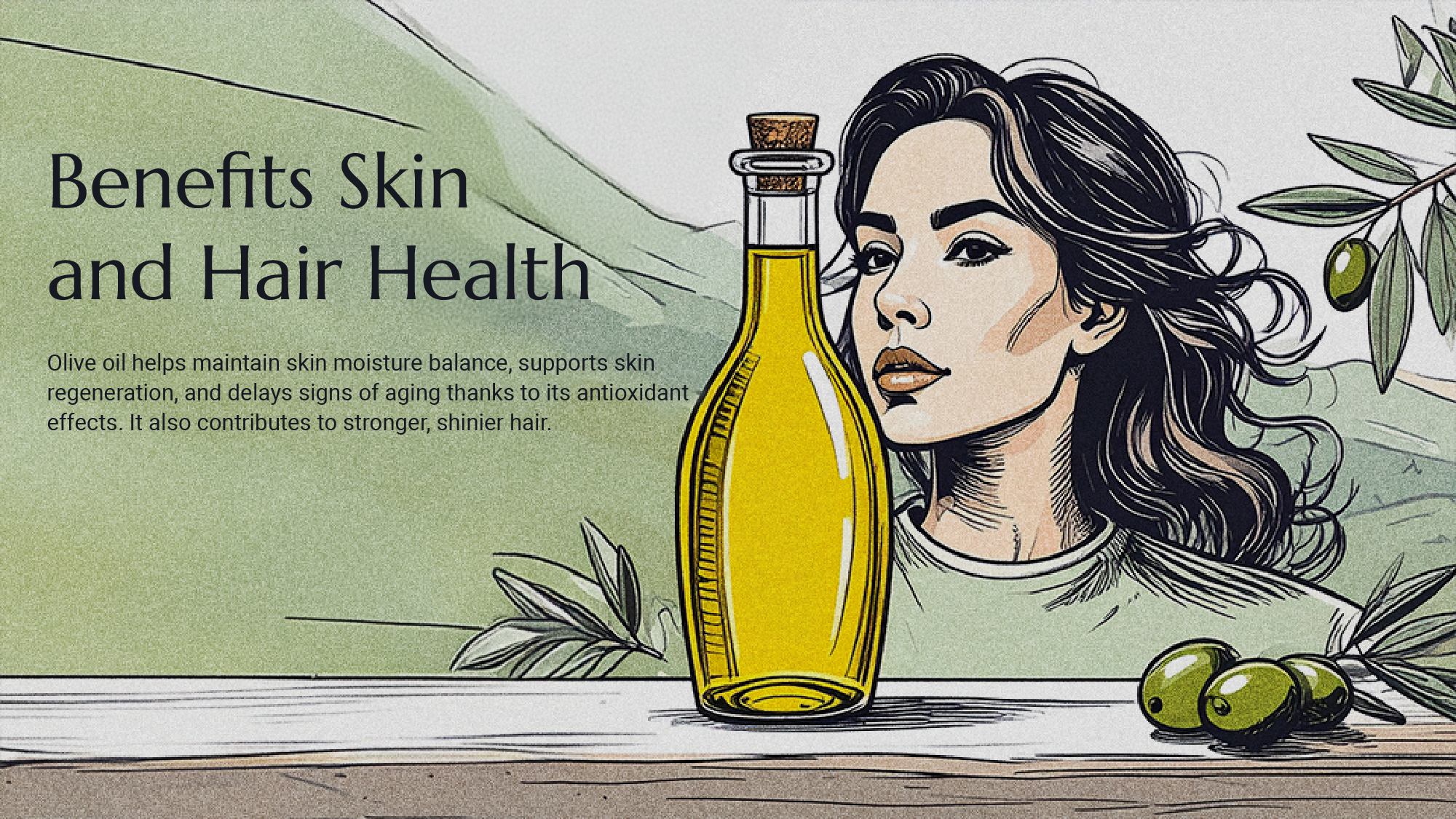
Olive oil helps maintain skin's moisture balance, supports skin regeneration, and helps delay signs of aging thanks to its antioxidant effects. It also contributes to stronger, shinier hair.
These benefits come from olive oil's vitamin E, squalene, and polyphenols, which combat the oxidative stress behind premature aging. The strongest evidence is for olive oil and olive-derived ingredients consumed as part of a healthy diet. A practical note on topical use: some dermatology research has found that rubbing plain olive oil directly onto skin can weaken the skin barrier, so it is generally discouraged for infants and people with eczema. Olive oil is best valued first and foremost as a food.
More science-backed benefits of olive oil
- Type 2 diabetes: In the PREDIMED trial, a Mediterranean diet rich in EVOO was associated with about a 40% lower risk of developing type 2 diabetes — without calorie counting or weight loss.
- Weight management: Despite being calorie-dense (~120 kcal per tablespoon), an unrestricted EVOO-rich diet did not cause weight gain over five years in PREDIMED, and oleic acid helps trigger satiety hormones. Olive oil is best used to replace other fats, not added on top.
- Longevity: A Harvard cohort of more than 90,000 adults found that the highest olive oil intake was associated with roughly 19% lower overall and cardiovascular mortality, with benefits clearest when olive oil replaced animal fats.
- Gut & bone health: Olive polyphenols may act prebiotic-like in the gut, and higher EVOO intake has been linked to fewer osteoporotic fractures in older adults.
As with all nutrition research, most of these findings are associations observed in people who eat olive oil as part of an overall healthy, Mediterranean-style diet — they are encouraging, but they are not proof that olive oil alone causes the benefit.
Extra virgin vs. regular olive oil: which is healthier?
Extra virgin olive oil (EVOO) is extracted purely by mechanical, cold-press methods — no heat, no chemicals — which preserves its polyphenols and gives it a fresh, peppery, fruity flavor. "Regular," "pure," or "light" olive oils are refined: processed with heat and chemicals for a neutral taste and longer shelf life, but with nearly all of the beneficial polyphenols stripped out. By international standard, extra virgin olive oil has a free acidity of no more than 0.8%. If health is your priority, choose extra virgin — and look for a recent harvest date, dark glass or tin packaging, and a high polyphenol content.
Can you cook with extra virgin olive oil?
Yes — and the popular myth that you "can't cook with EVOO" is wrong. While its smoke point is moderate (around 190–207°C / 374–405°F), smoke point is a poor predictor of how a fat behaves when heated. Olive oil's natural antioxidants make it remarkably stable; testing has shown EVOO produces fewer harmful compounds than many higher-smoke-point oils when heated. It is excellent for sautéing, roasting, drizzling, and dressings alike.
How much olive oil should you have per day, and how to store it
Most guidance points to about 1.5–3 tablespoons (20–40 g) per day, used in place of butter, margarine, or other saturated fats rather than added on top of them. Store olive oil in a cool, dark place in a sealed dark glass or tin bottle, away from heat, light, and air — its three biggest enemies. Don't refrigerate it (it can turn cloudy), and use an opened bottle within about three to four months for the best flavor and antioxidant content.
Frequently asked questions
Is extra virgin olive oil healthier than regular olive oil?
Yes. Extra virgin olive oil is cold-pressed without heat or chemicals, so it keeps polyphenols like hydroxytyrosol and oleocanthal. Refined "regular," "pure," or "light" olive oil is processed with heat and chemicals, which removes nearly all of those polyphenols.
How much olive oil should I consume per day?
Most guidance suggests about 1.5–3 tablespoons (roughly 20–40 g) per day, ideally replacing butter and other saturated fats. The FDA's qualified health claim references about 1.5 tablespoons (20 g) of high–oleic-acid oils daily.
Can you cook with extra virgin olive oil?
Yes. Despite a common myth, EVOO is one of the most stable cooking oils because its antioxidants resist heat, and in testing it produced fewer harmful compounds than many higher-smoke-point oils. It's suitable for sautéing, roasting, and even frying.
Does olive oil lower cholesterol?
Replacing saturated fats with olive oil's monounsaturated fat helps lower LDL ("bad") cholesterol and may modestly raise HDL ("good") cholesterol. The EU also permits a claim that olive oil polyphenols help protect blood lipids from oxidative stress.
Is olive oil good for your heart?
The evidence strongly supports it. The PREDIMED randomized trial linked a Mediterranean diet with extra virgin olive oil to about a 30% lower risk of major cardiovascular events, and large U.S. cohort studies have associated higher olive oil intake with lower heart-disease risk.
Is olive oil anti-inflammatory?
Yes. Extra virgin olive oil contains oleocanthal, which inhibits the same COX enzymes as ibuprofen, and olive-oil-rich diets are linked to lower inflammatory markers such as CRP and IL-6. The effect is dietary and gradual, not equivalent to a drug dose.
Is olive oil good for your skin?
Olive oil contains skin-friendly antioxidants such as vitamin E, squalene, and polyphenols. However, applying plain olive oil directly to the skin can weaken the skin barrier for some people, and it is discouraged for infants and those with eczema — so it is best valued as a food.
The bottom line
Few foods are as well studied — or as delicious — as extra virgin olive oil. The strongest evidence supports its role in heart health, healthy inflammation, and longevity, with promising links to brain, metabolic, skin, and bone health. The key is quality: choose a genuine, fresh, polyphenol-rich extra virgin olive oil and make it your everyday fat. At Olive Oil Anatolia, our cold-pressed extra virgin olive oil is crafted from carefully selected Anatolian groves to deliver exactly the kind of fresh, high-polyphenol oil this research describes.
This article is for general information only and is not medical advice. Many of the studies cited are observational and show associations rather than proof of cause. Speak with a qualified healthcare professional about your individual needs.
Selected sources
- American Heart Association — The benefits of adding a drizzle of olive oil to your diet (2022).
- PREDIMED trial — New England Journal of Medicine (2018 republished).
- Guasch-Ferré et al. — Journal of the American College of Cardiology (2020).
- U.S. FDA — Qualified health claim for oleic acid and coronary heart disease (2018).
- Beauchamp et al. — Oleocanthal, an anti-inflammatory in olive oil, Nature (2005).
- Tessier et al. — Olive oil and dementia-related death, JAMA Network Open (2024).
- EFSA — Scientific opinion on olive oil polyphenols and blood lipids (2011).
- Harvard Health & Cleveland Clinic — Extra virgin vs. regular olive oil; storage and cooking guidance.