
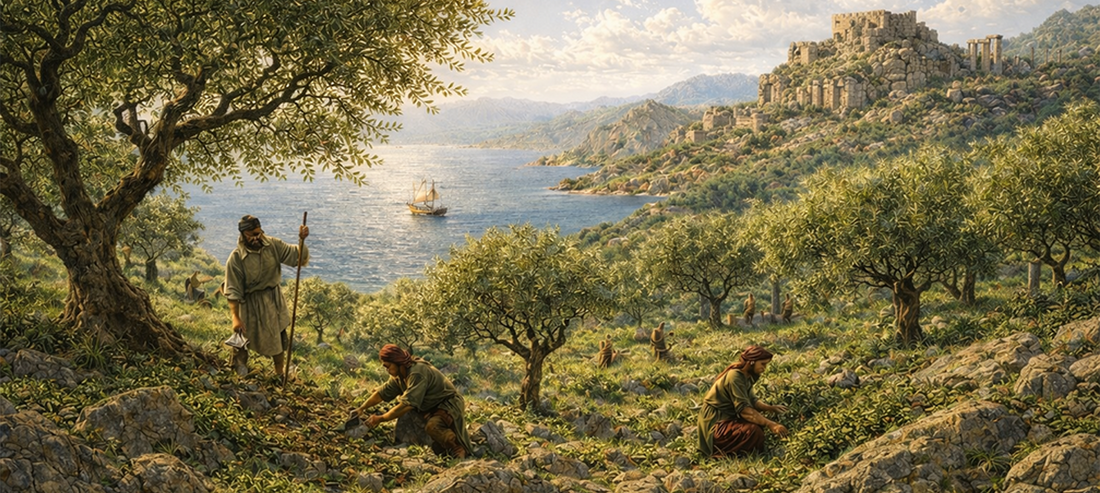
Early Beginnings & Wild Olive Trees
The wild olive tree, Olea europaea, still grows on Anatolia’s hills, and many scientists believe this land was one of its earliest homes. Around 6,000 to 8,000 years ago, people here were already growing and using olives.
Read the full chapterClose
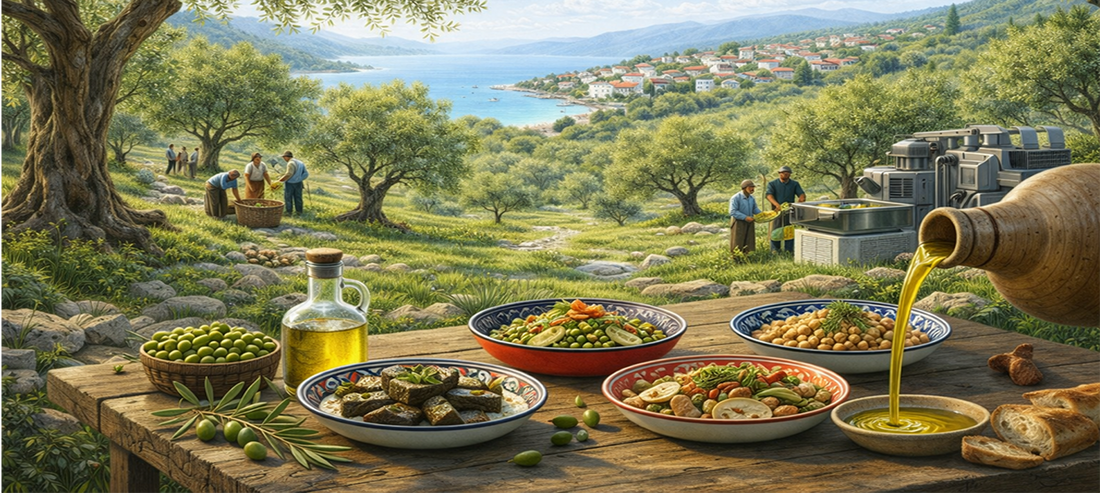
Imagine the hills of Anatolia, where rugged rock meets soft sea-breeze, and silver-green leaves whisper in the sunshine. It is here that the wild olive tree, Olea europaea, still grows naturally among forests and slopes. Many scientists believe this region - ancient Anatolia or Asia Minor -was one of its earliest homes.
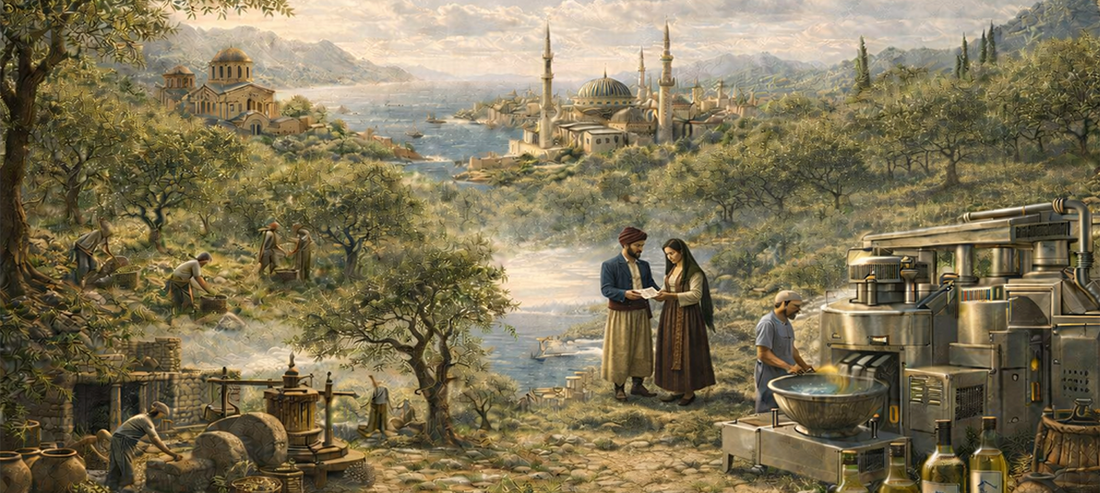
From this wild ancestor, human hands learned to cultivate and care for the olive tree. Over time, people planted it, tended it, and its reach spread across the Mediterranean.
Archaeological findings show that olive use goes back thousands of years. Evidence suggests that around 6,000 to 8,000 years ago, people in the eastern Mediterranean, including
modern-day Türkiye and Syria, were already growing and using olives.
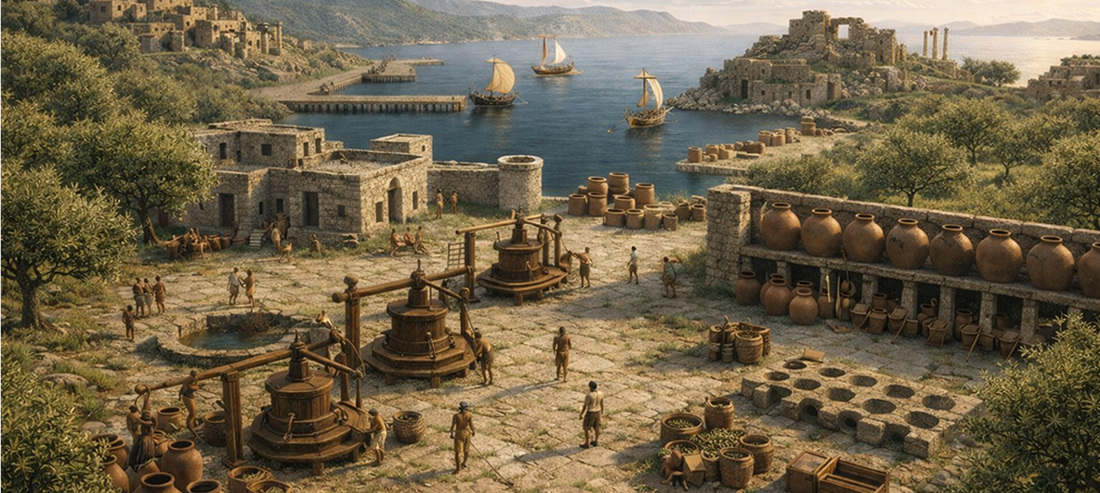
Inside Anatolia itself, especially along its southern coast in the region historically known as Cilicia, there are ancient settlement sites where olive cultivation and oil production played an important role in people’s lives and trade.